

Summary
Blockchain is evolving beyond cryptocurrency, offering transparency, security, and efficiency for cross-industry business operations.
Its decentralized and tamper-proof structure helps companies reduce fraud, streamline workflows, and enhance data integrity.
Real-world applications span supply chain traceability, healthcare record security, financial transactions, real estate digitization, and digital identity verification.
Despite its value, businesses face adoption challenges such as complexity, legacy system integration, scalability limits, regulatory uncertainty, and security misconceptions.
Companies can overcome these barriers through education, pilot projects, hybrid integration, permissioned blockchains, and strong governance to unlock long-term strategic benefits.
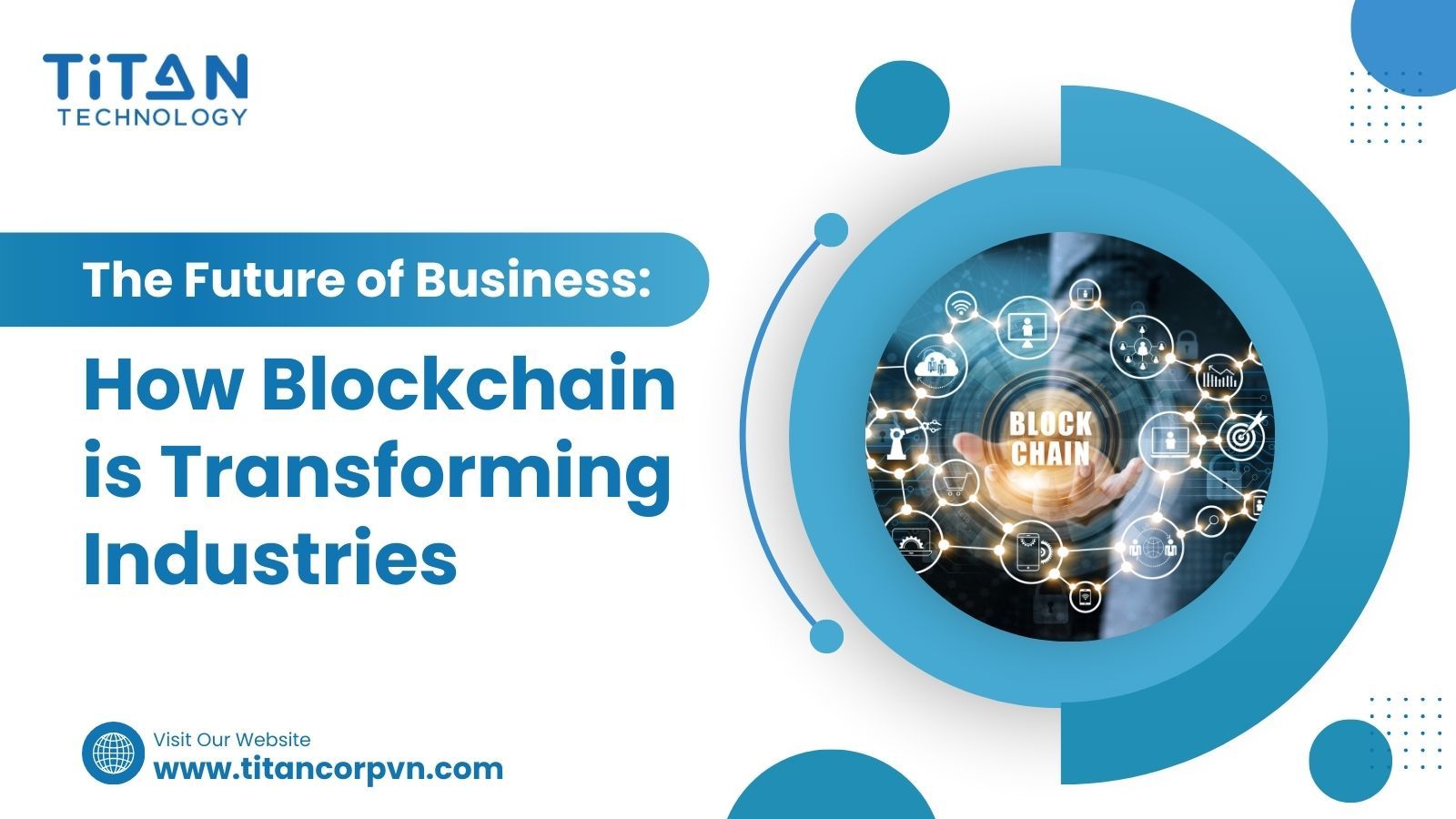
Blockchain is no longer just a buzzword in the world of cryptocurrencies. It has grown into a transformative technology that is changing how businesses operate across industries—from healthcare and supply chain management to real estate and digital identity verification.
At Titan Technology, we see blockchain as more than a tool for financial transactions. Its ability to provide transparency, security, and efficiency makes it a game-changer for companies looking to modernize operations and build trust with customers. By decentralizing data and ensuring tamper-proof records, blockchain opens up new possibilities for businesses to streamline workflows, reduce fraud, and improve decision-making.
Understanding blockchain might seem complex, especially for those outside the tech industry. However, its real-world applications are already shaping the way businesses function. Whether you’re a startup exploring innovation or a corporation seeking smarter, more secure solutions, blockchain is a technology worth considering.
In this article, we’ll explain how blockchain works and explore its potential to revolutionize industries beyond finance. Let’s dive in.
Understanding Blockchain: A Simple Guide for Businesses
Blockchain might sound like a complex technology, but at its core, it’s a secure and transparent way to store and share data. Unlike traditional databases controlled by a single authority, blockchain operates as a decentralized ledger, meaning that information is stored across multiple locations instead of a single central server. This structure makes it more secure and harder to tamper with, making it ideal for businesses that require trust and transparency.
How Blockchain Works in Simple Terms
Imagine a shared notebook where every participant records transactions, and once a page is filled, it gets locked permanently. No one can erase or alter what’s written, but everyone can see and verify the information. This is essentially how blockchain functions—data is recorded in blocks, and once verified, each block is added to a chain of previous transactions.
Each new transaction must be validated through a process called "consensus," meaning multiple parties (or computers in the network) must agree that the transaction is legitimate before it is permanently added. This eliminates the need for a central authority, reducing the risk of fraud and errors while increasing trust between businesses and their customers.
Why Businesses Should Care About Blockchain
Blockchain’s benefits might not seem immediately clear to companies outside the tech industry. But in reality, its impact is already reshaping industries:
Enhanced Security: Unlike traditional databases, blockchain’s decentralized structure makes it significantly harder for cybercriminals to attack or alter sensitive data.
Improved Transparency: Every transaction is recorded and visible to authorized parties, reducing disputes and increasing trust.
Efficiency & Cost Savings: By removing intermediaries (such as banks or middlemen), blockchain speeds up processes, reduces paperwork, and lowers transaction costs.
At Titan Technology, we help businesses integrate blockchain solutions tailored to their specific needs. Whether you're looking to secure your supply chain, streamline operations, or explore digital contracts, blockchain can transform your company's operations.
Real-World Applications of Blockchain in Business
Blockchain is more than just a concept—it’s already transforming industries by solving real business challenges. Companies across various sectors are leveraging blockchain to improve transparency, security, and efficiency in previously impossible ways.
1. Supply Chain Management: Ensuring Transparency and Traceability
One of the biggest challenges in global supply chains is tracking the journey of products from manufacturers to end consumers. Traditional supply chains often lack transparency, leading to inefficiencies, fraud, and counterfeiting.
Blockchain enables businesses to create a tamper-proof digital record of every step in the supply chain. By integrating blockchain, companies can:
Verify the authenticity of goods (e.g., luxury brands, pharmaceuticals).
Track shipments in real time, reducing delays and losses.
Ensure ethical sourcing of materials, such as fair-trade coffee or conflict-free diamonds.
For example, IBM’s Food Trust blockchain network allows retailers and suppliers to track the origin of food products, reducing waste and improving food safety.
2. Healthcare: Securing Patient Records and Enhancing Data Integrity
Medical data security is a top priority in healthcare, yet traditional systems are prone to breaches, mismanagement, and inefficiencies. Blockchain ensures secure and unalterable patient records, giving authorized medical professionals access to accurate and up-to-date information while protecting patient privacy.
With blockchain, healthcare organizations can:
Enable seamless data sharing between hospitals and clinics.
Prevent medical fraud by ensuring records cannot be altered.
Streamline insurance claims by automating verification processes.
Countries like Estonia have already implemented blockchain-based healthcare records, allowing citizens to securely control and access their medical history.
3. Finance & Banking: Faster, More Secure Transactions
The financial industry was among the first to adopt blockchain because it eliminates intermediaries, reduces transaction costs, and increases security. Unlike traditional banking systems that rely on third parties, blockchain enables direct and instant transactions, even across borders.
Financial institutions use blockchain to:
Speed up international payments and reduce transfer fees.
Improve fraud detection with transparent transaction histories.
Enable smart contracts—self-executing contracts that automate transactions based on pre-defined conditions, reducing paperwork and human error.
Companies like Ripple and Stellar already use blockchain to revolutionize cross-border payments, making transactions faster and more cost-effective.
4. Real Estate: Streamlining Property Transactions
Buying and selling property is often a slow, complex process involving multiple intermediaries, contracts, and verification steps. Blockchain simplifies real estate transactions by digitizing property records, automating contracts, and reducing fraud risks.
With blockchain, real estate companies can:
Reduce paperwork with digital contracts stored securely on a blockchain.
Prevent fraud by verifying ownership history transparently.
Speed up property transfers, making transactions more efficient.
Countries like Sweden and the UAE have piloted blockchain-based land registries to streamline property transfers and eliminate disputes over ownership.
5. Digital Identity and Authentication: Preventing Fraud and Enhancing Security
Identity theft and data breaches are major concerns in today’s digital world. Blockchain offers a secure way for individuals to control and share their personal data without relying on centralized institutions.
Blockchain-based identity solutions allow users to:
Securely store personal information without the risk of hacking.
Verify their identity instantly without relying on passwords or third parties.
Prevent fraudulent activities such as fake accounts and unauthorized access.
Microsoft’s Azure Blockchain and Estonia’s e-Residency program are examples of blockchain-driven identity verification systems that provide a more secure and efficient alternative to traditional methods.
What This Means for Your Business
The adoption of blockchain is no longer a question of "if" but "when." Whether you’re in finance, healthcare, supply chain, or real estate, blockchain offers opportunities to increase efficiency, reduce costs, and build trust with customers and partners.
Challenges of Blockchain Adoption and How to Overcome Them
While blockchain offers numerous advantages, integrating it into existing business operations comes with challenges. Many companies recognize its potential but hesitate due to technical, regulatory, and financial barriers. Understanding these obstacles and how to navigate them is essential for businesses looking to leverage blockchain successfully.
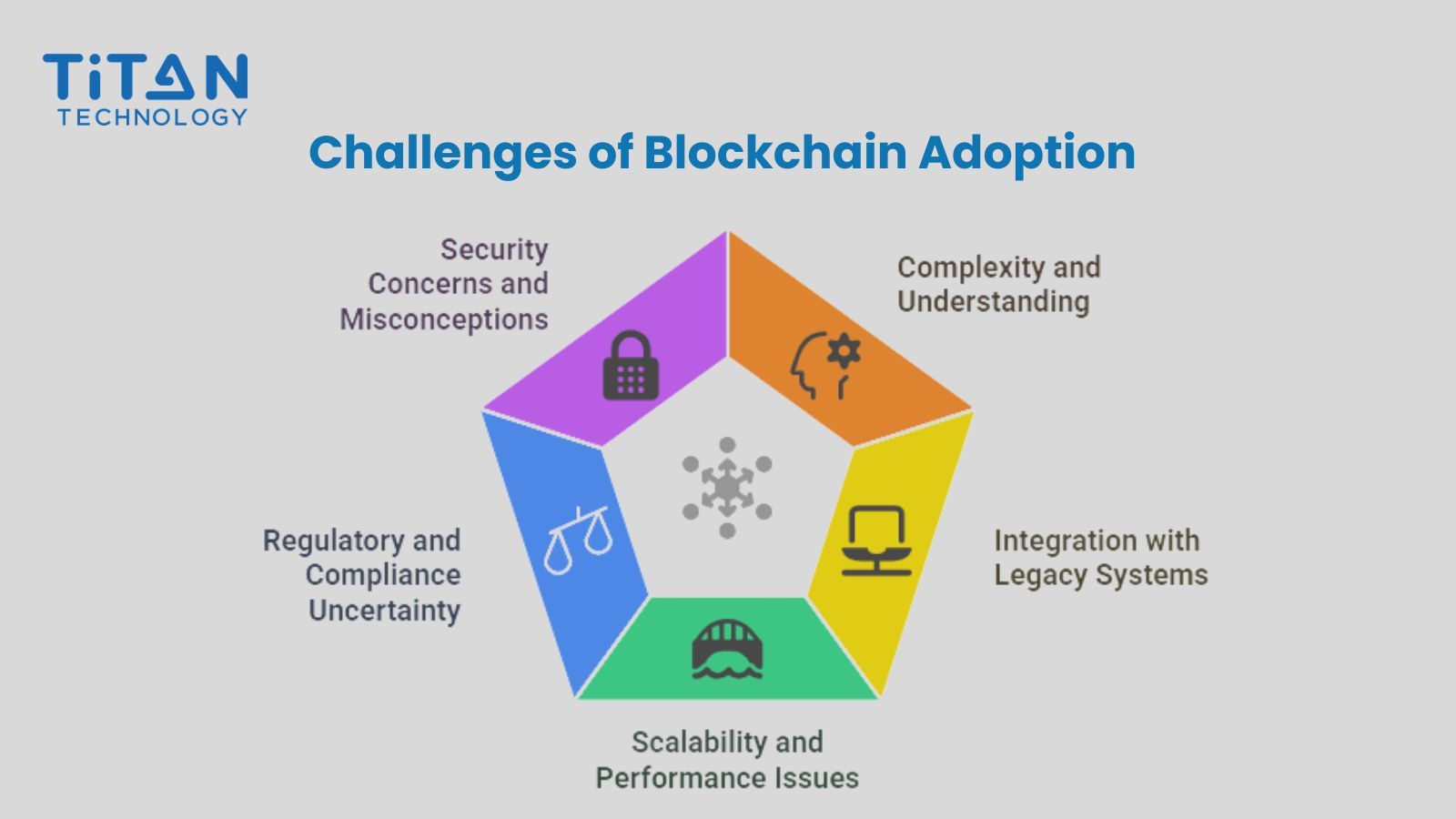
1. Complexity and Lack of Understanding
Blockchain can seem overwhelming to non-technical businesses. Unlike traditional databases, it operates on a decentralized network, requiring a shift in how businesses manage and secure data. Many decision-makers struggle to grasp its full potential and hesitate to invest in technology they do not fully understand.
How to Overcome It:
Education and Awareness: Companies should invest in workshops, training, and consultations with blockchain experts to better understand how it can add value.
Pilot Projects: Start small with proof-of-concept projects before scaling up. This allows businesses to see real-world benefits without committing significant resources upfront.
2. Integration with Legacy Systems
Most businesses operate on traditional IT infrastructures that were not designed for blockchain. Transitioning to blockchain requires significant changes in data storage, security protocols, and transaction processing. The integration process can be complex and resource-intensive.
How to Overcome It:
Hybrid Approaches: Companies can gradually transition by combining traditional databases and blockchain solutions without disrupting current operations.
API Integration: Modern blockchain platforms offer APIs that allow businesses to integrate blockchain into existing applications without a complete system overhaul.
Expert Guidance: Partnering with a technology provider like Titan Technology ensures smooth integration, minimizing disruptions and maximizing efficiency.
3. Scalability and Performance Issues
One key concern about blockchain is its ability to handle a high volume of transactions efficiently. Public blockchains like Bitcoin and Ethereum have faced scalability challenges, and transaction speeds lag behind traditional payment systems.
How to Overcome It:
Layer-2 Scaling Solutions: Technologies like the Lightning Network and Ethereum’s Layer-2 solutions improve transaction speeds without compromising security.
Private and Permissioned Blockchains: Businesses can use private blockchains that are optimized for faster processing and scalability.
Optimized Smart Contracts: Well-designed smart contracts reduce unnecessary computational load and increase efficiency.
4. Regulatory and Compliance Uncertainty
Blockchain operates in a decentralized environment, often challenging traditional regulatory frameworks. Governments worldwide are still defining laws around blockchain, creating uncertainty for businesses looking to adopt it.
How to Overcome It:
Stay Updated on Regulations: Businesses must monitor legal developments in their region to ensure compliance.
Collaborate with Regulatory Bodies: Engaging with regulators can help shape industry-friendly policies while ensuring compliance.
Adopt Compliance-Friendly Solutions: Permissioned blockchains with built-in compliance controls can help businesses meet legal requirements while benefiting from blockchain technology.
5. Security Concerns and Misconceptions
While blockchain is inherently secure, vulnerabilities can arise from poor implementation, smart contract bugs, and external threats, such as 51% attacks (in public blockchains). Some businesses also mistakenly believe blockchain is immune to all cybersecurity threats.
How to Overcome It:
Smart Contract Audits: Conduct regular security audits to identify and fix vulnerabilities in blockchain applications.
Private Blockchains for Sensitive Data: Companies handling confidential data can use permissioned blockchains to enhance security.
Multi-Factor Authentication: Adding extra security layers to blockchain-based applications can prevent unauthorized access.
Moving Forward: Is Your Business Ready for Blockchain?
Blockchain adoption is a journey, not a one-time switch. While challenges exist, businesses that proactively address these issues can gain a competitive advantage.
We guide businesses through every stage of blockchain implementation—from education and pilot testing to full-scale deployment. Whether you are exploring blockchain for the first time or looking to scale an existing solution, our team ensures a seamless transition with minimal risk.
Blockchain: A Strategic Investment for the Future
Blockchain is more than a trend—it’s a strategic advantage for businesses looking to innovate and future-proof their operations. From enhancing security and transparency to eliminating inefficiencies and reducing costs, blockchain has the potential to transform industries in once-impossible ways.
At Titan Technology, we are committed to helping businesses navigate their blockchain journey—from education and strategy to development and deployment. Whether you're exploring blockchain for the first time or looking to expand your existing solutions, we’re here to ensure seamless integration and long-term success.
Now is the time to embrace blockchain and unlock new growth opportunities. Are you ready to take the next step? Let’s build the future together.